
Blurbing: Part I
On the second most hated aspect of book publishing.
In US book publishing, the word blurb means an endorsement from another writer that’s used as a selling tool, most publicly on a dust jacket. Everyone hates blurbing. Mostly it’s that people hate asking for blurbs, but many people also hate being asked (and occasionally hate not being asked), hate figuring out whom to ask, hate confronting an ever-refreshing pile of blurbing homework, hate sending or receiving blurb-related follow-ups, hate waiting for blurbs, hate not getting blurbs.
At a conference a couple of years ago, in response to the question, “What one thing about publishing would you most like to change?” a senior editor answered, “I’d get rid of blurbing.”
Why all the hate?
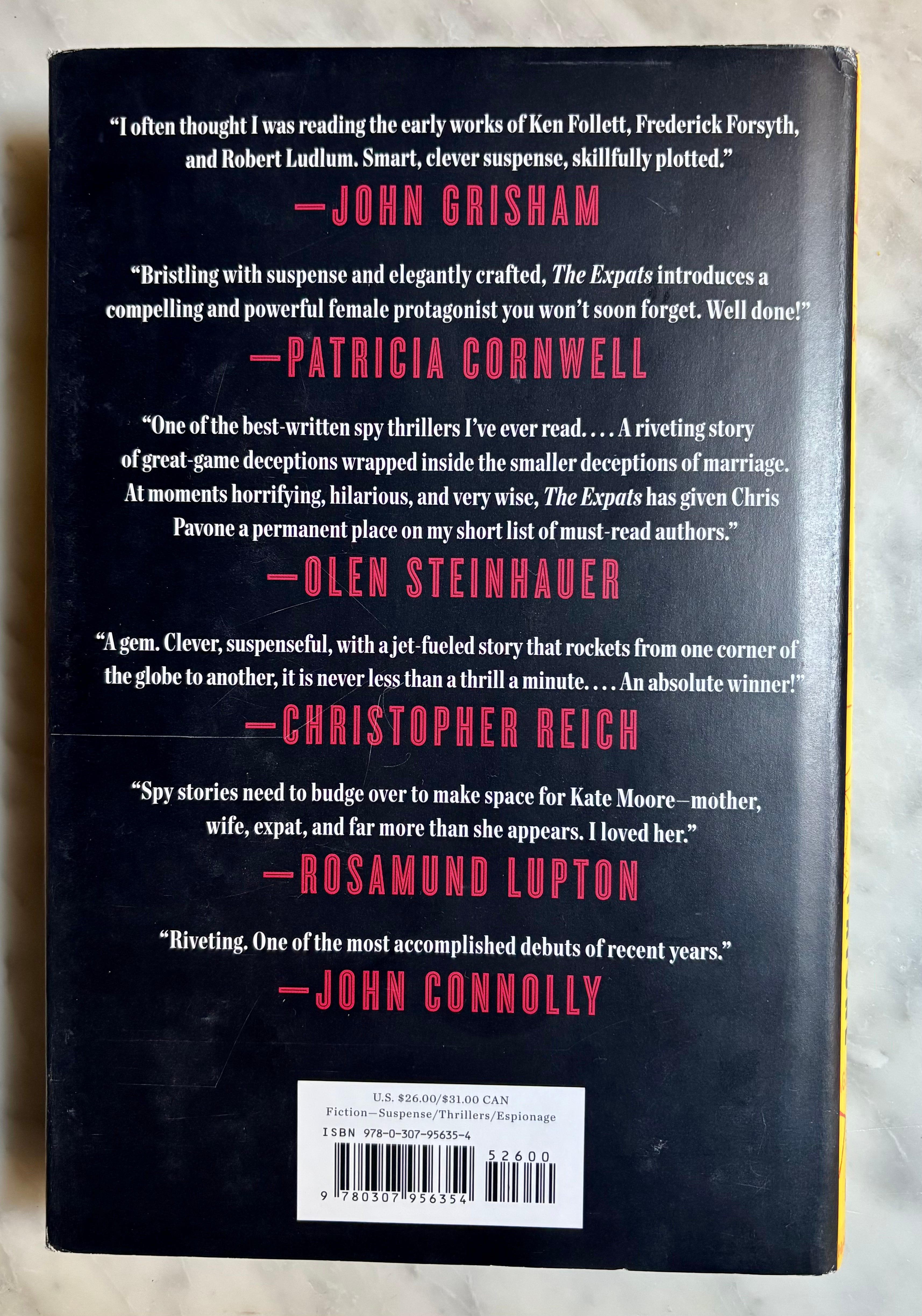
The Expats, 2012
It’s a huge ask
When you ask an author to take a look at a book with an eye toward possibly blurbing, the first thing you’re asking for is a big chunk of that person’s life simply to read the thing. Every author has other things they’d like to do with that time, including reading books that they actually choose for themselves.
You’re also asking for that author to lend her reputation and credibility to the cause of helping advance someone else’s career, to help someone else earn money, and to be publicly associated with someone else’s book forever.
Individually, these are two separate and huge favors—and make no mistake, favors are what they are. No one is obligated to provide blurbs. And these favors are always asked in this inextricable pair: time and reputation.
Asking for huge favors is not fun. For many of the people doing the asking—editors and agents—it’s a burden that never goes away, you spend your whole career asking these huge favors, often asking the same people over and over, for decades. For the other people doing the asking—the authors—it’s far less frequent, but much, much worse. Please, you’re asking, will you tell me that I’m good a writer? Will you tell me, pretty please, that you like me? Will you do it in public?
Just describing it makes me want to throw up.
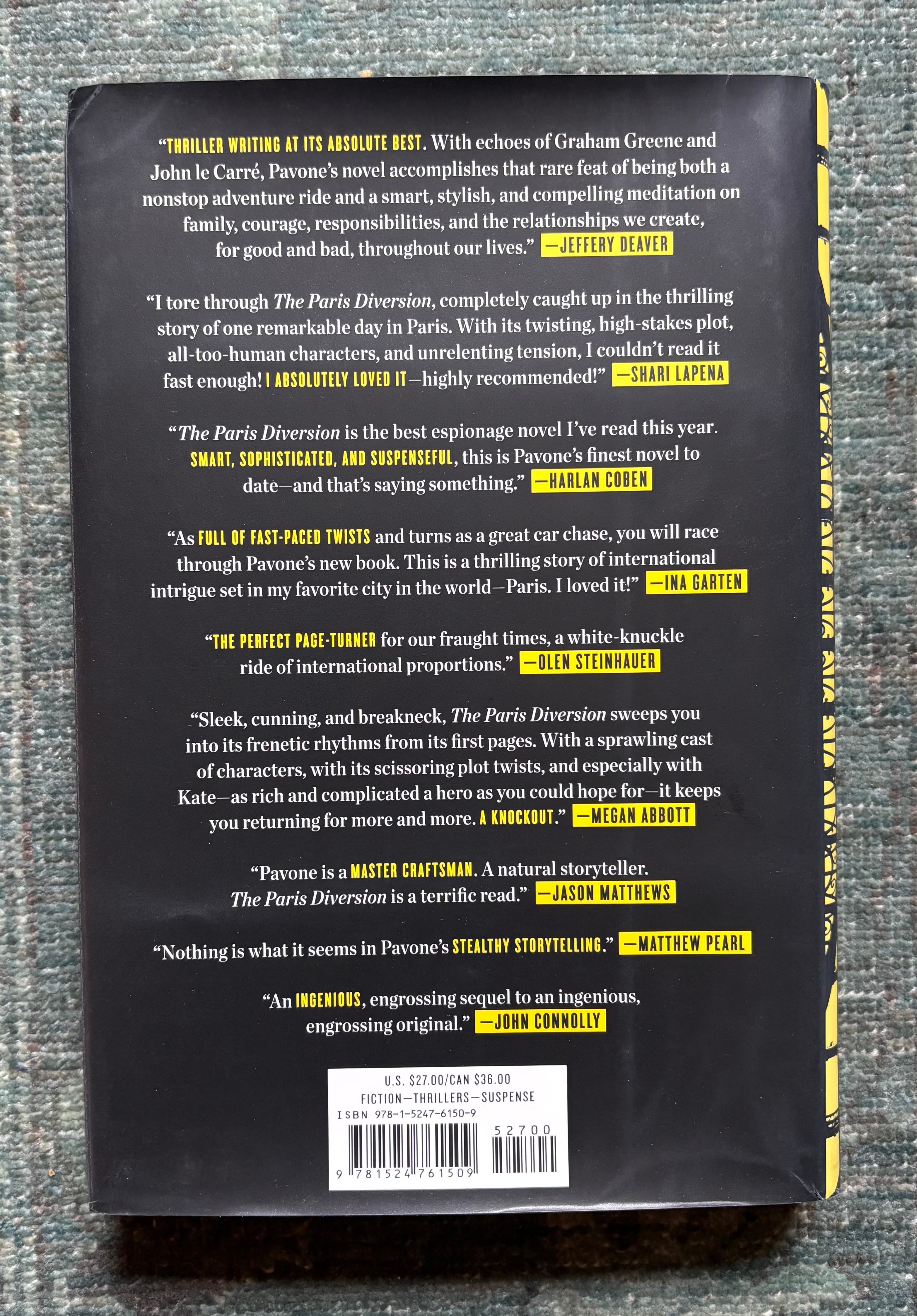
The Paris Diversion, 2019
The people you’re asking are asked all the time
The reason you’re seeking the endorsement to begin with is that the author is well-known, or well-respected, or sells a lot of books, and often all three. Unsurprisingly, these people are asked constantly. One mega-bestselling friend of mine receives five to ten requests every week. If he spent his entire workweeks doing nothing other than reading these submissions, he’d still never get through half of them, and wouldn’t have time to do anything else.
Me, I don’t have that sort of volume hanging over my head. But even from my much more modest position, there hasn’t been a day in the past decade and a half when I haven’t had at least one on my bedside table. At the moment there are a few.
And this must be said: many of the books that are sent to me are things I would not otherwise choose to read, and I will not enjoy. I suspect this is true for everyone. We’re sent a lot of stuff we don't want and don’t like.
For authors who receive an overwhelming volume of requests, they might feel as if they have no choice but to institute a blanket no-blurbing policy to protect their time, and to avoid hurting people’s feelings. If you don’t provide blurbs for anyone, no one can take it personally that you’re not providing a blurb for them. Hurt feelings are a huge part of the blurbing—hurt feelings are a huge part of publishing. Blurbing can ruin friendships.
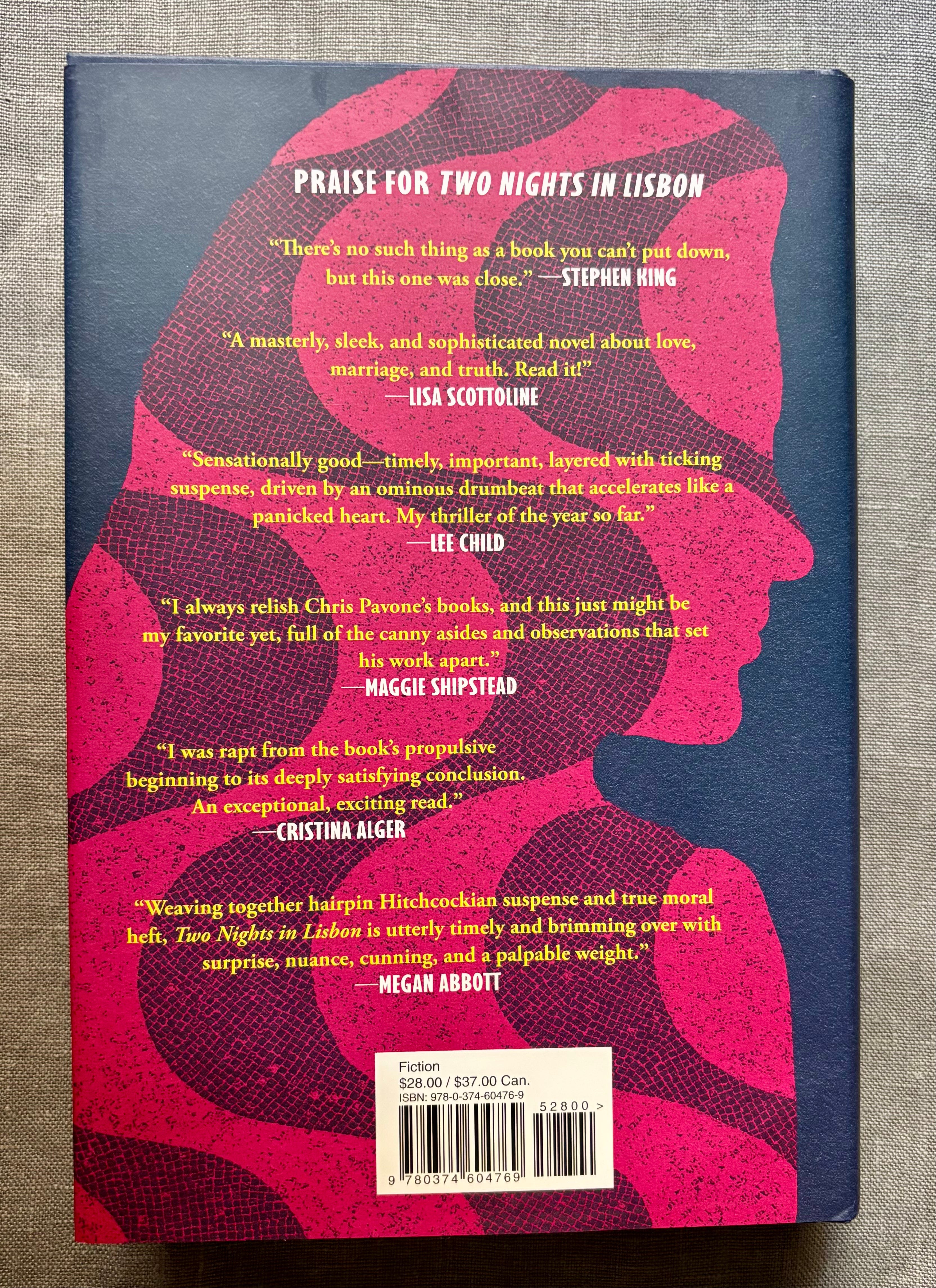
Two Nights in Lisbon, 2022
It can feel cliquey, transactional, and unfair
Because it sometimes is. Do you want to wallow in resentment while also wasting a lot of time? Then maybe you’d get a kick out of triangulating which authors attended which MFA programs together, based on the blurbs on their debuts. Or you can figure out which authors share literary agents or editors, or who teach together or work together, or who’ve shared residencies or retreats or writer’s groups, or who live in the same town, or who are simply friends.
In the ideal model of how creativity is or isn’t rewarded, I think many people might posit that relationships shouldn’t matter; it’s only the quality of the work that should count. But publishing, like every other field of endeavor, is one of relationships. People are more inclined to do favors for people they like, or at least know, and I’m sure this inclination intensifies with volume. That mega-bestseller who gets pitched dozens of books per month, he’ll have time to read only a few of them, at most. How is he going to make the choice which people to do favors for?
This adds networking and friendships to an equation that in the abstract might seem like it shouldn’t involve personal relationships. Is this unfair? That’s a matter of opinion, and I don't think it’s simple one. Should writers be professionally rewarded for spending years of their lives—and small fortunes—in MFA programs? Should other writers be penalized for being unsociable, or antisocial, or just naive? Should professional favors be reciprocated? Are transactional relationships inherently unethical?
These are all subjective questions. But as an objective matter of fact, this is how it works.
To put the ask another way
Dear Author,
Hello! You don’t know me, but I’m writing to you, out of the blue, in the hope that you’ll donate 10 to 15 hours over the next few weeks (your choice! but TBH the sooner the better) to reading every word of my yet-to-be-published novel (there are ample typos!), and love it, then craft a wildly enthusiastic endorsement that my publisher will plaster on my book’s jacket and its catalog page and its Amazon listing—in every possible commercial environment, all over the world if they can manage it—so that my career can be advanced, and just maybe (fingers crossed!) allow me to skim readers (and money too) off your coattails, in exchange for nothing whatsoever except my thanks?
Sincerely,
A Complete Stranger
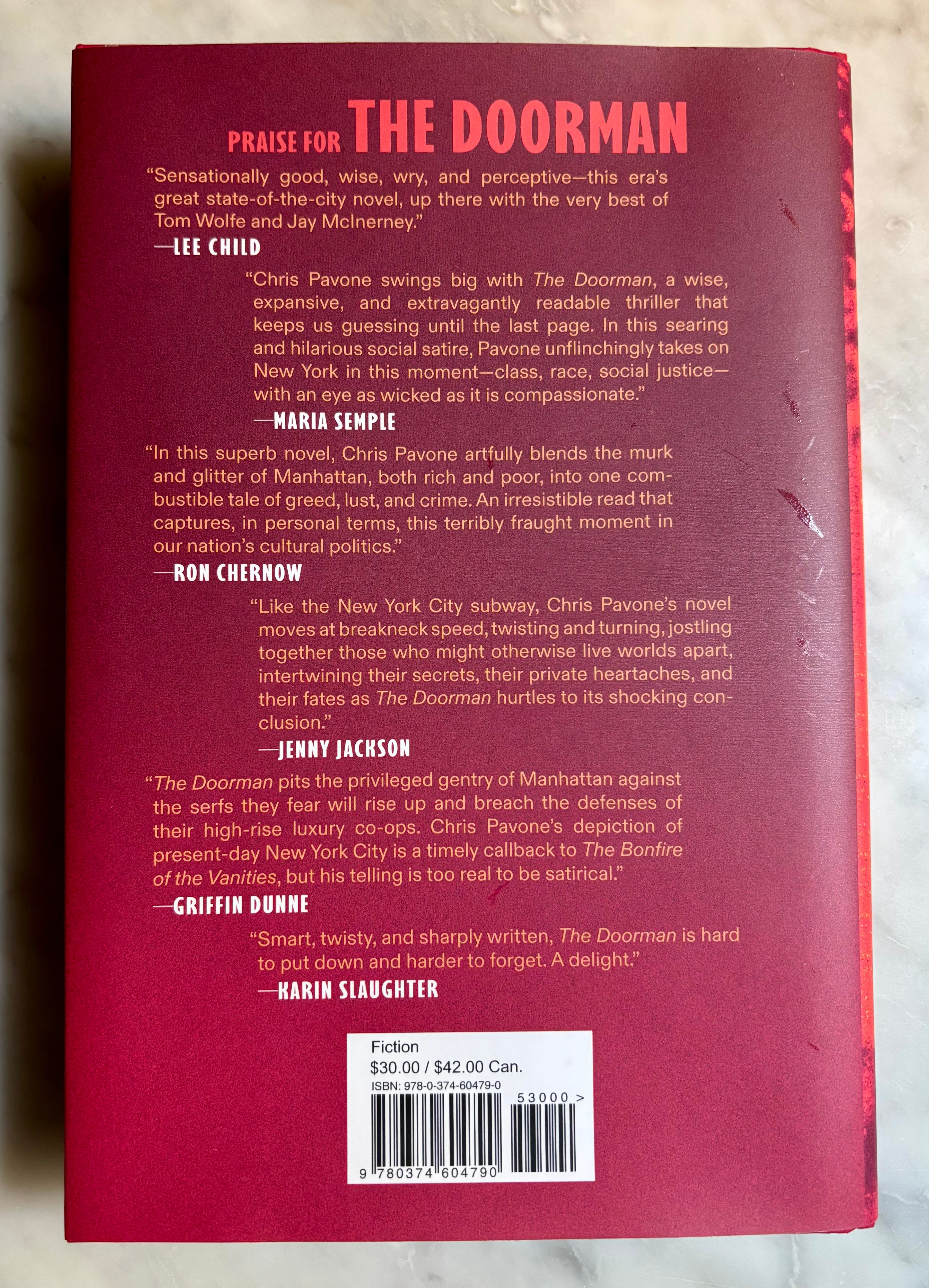
The Doorman, 2025
If everyone hates it, why do we do it?
Because it works, and there are no better alternatives.
A book needs to attract a few different audiences, and they’re all important. One is in-house at the publisher. At any given moment, a publishing house may have hundreds of books in its pipeline, each vying for the attention and resources of the entire company. It’s the editor’s job to generate this enthusiasm, by providing ammunition that makes a case for the book’s prospects.
In the year(s) between a book’s acquisition and its publication, what ammunition can the editor provide? There’s usually only one possibility: blurbs. Blurbists are readers, after all, and if blurbists love a book, that’s an encouraging sign that a wider readership might love it too. Publishing houses are in the business of betting on favorites to win, and books with blurbs look more like winners than books without blurbs.
The next audience is the trade: the retailers who will sell the book, and the media who will publicize it. The publishing-house personnel may have hundreds of titles to consider, but these gatekeepers have thousands. They pay attention to blurbs for the same reason as in-house personnel: they too are in the business of giving the people what they want.
The final audience is those people, browsing in a bookshop, trying to figure out what they want, their eyes jumping from jacket to jacket, turning a book over to skim its blurbs, opening the flap to read a description. At a presentation of a consumer-behavior report a few years ago, I learned that endorsements are one of the most decisive factors for discoverability of new writers.
But by the time a book is at the bookshop point in its lifecycle, the battle for readers’ attention has been largely fought already. If the book is sitting there on a display table, the battle has been won; 99.9% of books will not be there. If the battle has been lost, the book isn’t even in the building.
This battle is tough, and very few weapons are available. It’s hard to win without using all of them.
Miscellaneous blurbing questions, answered
I’ve been asked if blurbs are bought and sold. No, I don’t think anyone reputable does that.
I’ve been asked if I’d ever blurb a book without reading it. That answer too is no, never, at least not for me.
I’ve been approached at conferences and parties and asked, “Will you blurb my book?” That answer is also—always—no. What I might say is “I’m happy to take a look,” but I’m not, and I won’t, because this is not how it’s done. I’ll explain next time, deeper in the trenches of the second most hated aspect of book publishing.
So what’s the number one most hated aspect?
Track record. That too is a subject for another time.
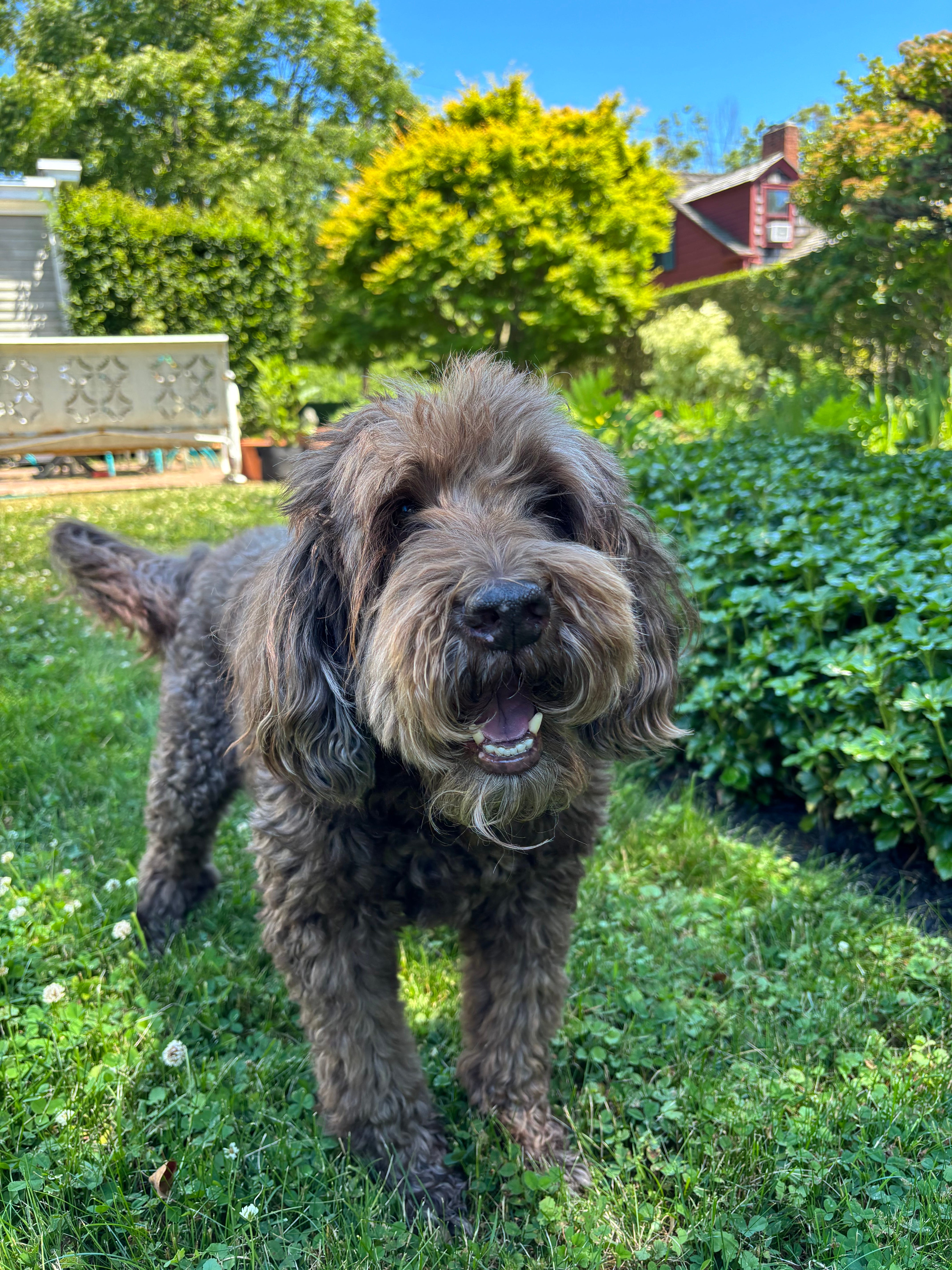
At the other end of the spectrum: I’m not going to claim that Wally is the most loved aspect of book publishing—I’m not insane!—but he’s close. (Okay, maybe I am.)
I would like a blurb from Wally :)
My favorite part of your post is the information. My second favorite, Wally!