
Get Shorter
On the 10% challenge.
We’re all writers. Maybe you write mostly memos or legal briefs or just group-chat messages to your college roommates. But the only people who don’t write at all are people who aren’t reading this newsletter, or probably anything else.
Maybe you think of yourself as a careful, deliberate writer. Or maybe you don’t care. And maybe that doesn’t matter, most of the time. But sometimes it’s important. This is for those times.
A decade ago, I conducted a ludicrously unscientific experiment by asking a dozen publishing people the same question: What was your chief complaint about your favorite book of the past year?
Everyone who works in publishing faces the same challenge: too much to read. Booksellers, publicists, sales reps, reviewers, novelists—everyone—but most especially agents and editors. And reading multiple drafts of all their books (aka editing) is usually the least of it. There are also all the things written or edited or represented or published by friends or colleagues—the books people give you at lunch—as well as those that feel necessary to the industry or the culture, new homework assignments every day, and no clear due date. The other day I got a Jiffy bag with 4 books, none at my request.
But the real Sisyphean boulder is submissions: the 10 new projects (low estimate) that arrive every week. If you’re a nonfiction specialist, you have it easier (or less hard) because most of your submissions are book proposals, which can range from a single sentence to a hundred pages. A nonfiction editor receives anywhere from a couple hundred new pages per week to a thousand-plus.
That’s a drop in the bucket compared to fiction editors, whose submissions are mostly full manuscripts. If you get 10 of these in a week, and they average 400 pages, that’s 4,000 new pages arriving to your in-box, every week, forever. And that’s just your new submissions; you also need to read things submitted to your colleagues.
Unlike the homework, this classwork is all due asap. What does asap mean? It may not be apparent until you get this call: “This will go fast, are you interested?” Then suddenly it’s due tomorrow, and you haven’t started yet. So long, dinner with your kids.
Mostly, the answer is no, you’re not interested. Whether you do fiction or nonfiction or both, most weeks you’re going to end up pursuing zero of those submissions; you probably acquire 10 books per year. But you’re still going to need to read at least some of each to make your decision.
Reading time is, always, at a premium.
“It’s too long.”
That was the complaint that nearly all the publishing people had about their favorite book, mostly novels.
This is a curious homogeneity: although every one of these great books was—allegedly—too long, it was still their favorite. Which I think means that these books were not favorites despite being long; they were favorites because of it. If you love a book, you don’t want it to end, you want to continue to live in that world, with those characters, in that story; the length is one of the things you love about it.
It’s not just the publishing people I polled who love long books. Of the 15 novels on the current Times hardcover fiction list, 6 are are what I’d call long (more than 400 pp) and only 2 are short (under 300); the average is 407 pages. Whether the Harry Potters or Gone Girl or the current craze for romantasy, blockbusters are very often long. And possibly the most popular novelist of the past half-century? Nearly all of Stephen King’s books are long. The Stand is, for the love of god, 1,152 pages.
Length is an imposition, but it can be a welcome one, like an unexpected guest who turns out to be the life of the party, even if everyone at the table needs to scrunch closer together. We’ve all torn through a 500-page book in a weekend, and slogged through a 200-pager for a month.
So here I am, extolling the popularity of long books. Then why is this post titled “Get Shorter”?
Try something, please: whatever you’re in the midst of writing, choose one page, and force yourself to do one thing to that page: make it 10% shorter. If it’s 400 words, trim it 360.
That page is now better. Guaranteed.
Not because it’s shorter; in the overall scheme of things, it’s still the same length, one page. No, it’s better because you hunted for words that you could get rid of without sacrificing ideas, so you are now getting your readers to the point quicker. This is not really about shortening anything—the word count, total pages, reading time. This is about improving the reading experience, which is now more efficient, and more enjoyable.
Length is not what makes a book long. Flabby prose is what makes a book long.
Does 10% not seem like much? A rounding error? 10% is the difference between literally the average hitter in baseball and the best one in the sport; 10% per year is the difference between an investment that’s a loss and one that makes you rich. 10% is rarely incremental.
For every draft of every novel, I set aside a stage to accomplish one thing, and one thing only. During this stage I do not attempt to fix plot inconsistencies, nor heighten tension, nor smooth out dialogue, nor any of the other things I do when I’m revising. All I do during this stage is the one thing: make the manuscript shorter.
Because of the types of books I write—suspense—I use a lot of short chapters, most of them in the range of 8 manuscript pages. So, one chapter at a time, I make each 1 page shorter.
For some chapters, this is ludicrously easy, thanks to luck. If a chap’s final page 9 has only 1 word on it, then all I need to do is delete 1 line to trim that to 8 pp. That task may take a few seconds. (Though if it’s that easy, I never stop there; I try to get the chap down to 7 pp.) Conversely, a 4-page chap whose 4th page is full can take a couple of hours.
Mostly this is a matter of culling individual words, trying to make a paragraph one line shorter; if I do that for each of a couple dozen paragraphs, that amounts to a full page. When the lift is heavier, my solution is almost always the same: find a way to start a scene later, end it earlier, or both. Radically condensing a scene is something I need to do at least a dozen times per book.
This length goal is arbitrary; there’s no magic to 1 page. But what’s not arbitrary is the concentrated effort, the relentless focus on doing this single thing—turning a 510-pp ms. into a 440-pager, turning a 440-pager into 395.
This task takes 1-2 weeks of full-time work, and I usually do this for 3 drafts per book. Which means I spend at least 1 full month per novel doing nothing other than making it shorter.
“Do we need this?”
This is something you hear a lot from people who edit. Me, I don’t think that’s a particularly useful question for fiction. Reductio ad absurdum, the answer is always no, because we don’t need the whole damn thing. It’s a made-up story! No one needs any of it.
For me the more operative question is, “Does this add something?” Does this phrase strengthen character, establish atmosphere, advance plot, inject humor, smooth transition, whatever? Is it making the book better? If it’s not making the book better, it’s making it worse. There’s no neutral.
I do not write short books; that’s not a goal of mine. I’m trying to write books that readers love, books that I love. As a reader, many of my favorite passages don't need to be there—a delicious minor character, a sensory description of the environment, a funny bit of dialogue.
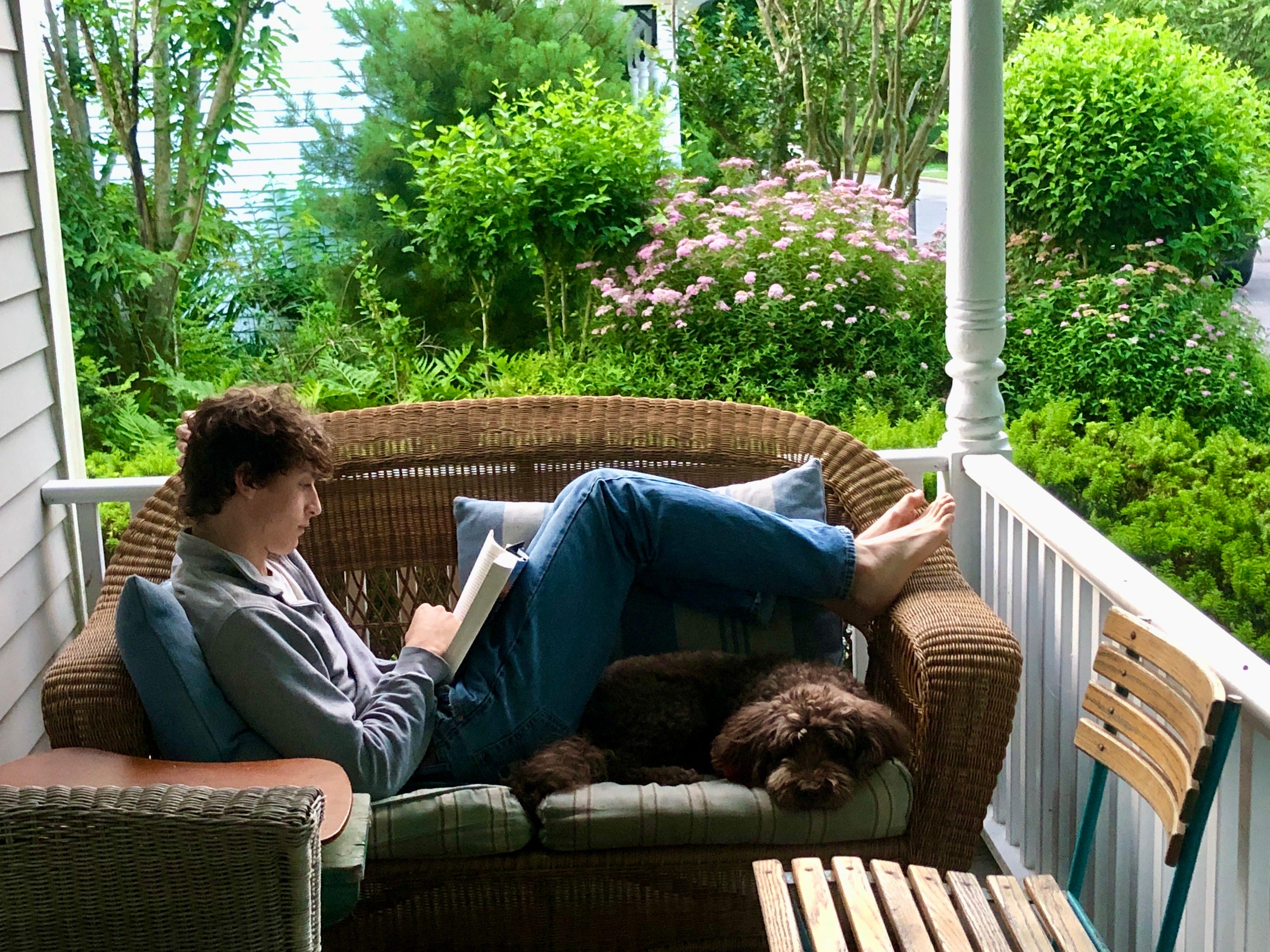
My wife once said, “If you don’t allow dogs on furniture, you’re missing the point of dogs.” Does the dog need to be on the sofa with you? Of course note. But that’s not the operative question.
Back to the experiment. Maybe your college roommates don’t care if your text message is 10% too wordy. And maybe that legal brief is actually better longer—maybe your goal is to bury your reader in an avalanche of words.
But everyone in publishing is going to care. They’re going to groan at a long submission, and possibly keep demoting it to the bottom of their pile. They’re going to apologize when they ask colleagues to read it. Still, if they love it, they love it, and if it’s long there’s more to love.
Here’s what they’re not going to love, though: a sentence on page 2 that doesn't add anything. That very well may be the last sentence that your prospective agent reads, or the editor to whom the project was submitted, or the sales rep, or the bookseller who’s deciding what to put in the shop window. That flabby worthless sentence might be what shifts the answer from yes to maybe, from maybe to no.
There are so many things about publishing that are out of the writer’s control, but this isn’t one. Everyone can do this, for everything: make it a little bit shorter.
Does Wally need to be on this loveseat? No. But that’s not the point.
This article didn’t go the way I thought it would. It was actually supportive of the long book and it gave me the impetus to try again, page by page.
I do the same thing with word count. My first novel was 140k words after adding in the stuff my editor wanted, and we agreed it should be no more than 110k words, so I shortened each chapter by 20%+ It's so fun and satisfying!