
The U.S. Book Open
On the single-elimination tournament that is publishing a book.
A couple of weeks ago I had an extremely long and thoroughly enjoyable lunch with Maria Semple, who referred to the process of publishing a book as a tournament: at every round, you either win, or lose. She couldn’t be more right.
I play tennis. I’ve never been very good, but I’ve been doing it for nearly a half-century, albeit increasingly hampered by injuries. I don’t watch much tennis on TV, because that just makes me antsy to play, but I have attended the exciting U.S. Open a few times. In a single-elimination tournament, everything is on the line for every player in every match, win or go home. For spectators, this is tremendous fun; for players, I imagine it’s something akin to torture.
That’s how it can feel for an author. Though in some rounds of traditional book publishing, you can advance—or be eliminated—without even knowing it. Almost all of it is out of your control.
The Qualifiers
As with an open tournament, anyone is welcome to enter book publishing, amateurs and professionals alike, regardless of previous accomplishments or credentials. You don’t need an English degree or an MFA, you don’t need experience as a writer, you don’t need a platform, you don’t need connections. All those might help, to minimal or middling degrees, at least getting in the door; all are increasingly irrelevant as the tournament progresses.
For amateurs, the tournament will begin with qualifying rounds, and the first is looking for an agent. You may not make it past this qualifier with your first manuscript, or your second. But maybe you’ll learn something from the experience, and show up next year, or the year after, with a stronger game.
If an agent agrees to represent you, the next qualifier is submitting the manuscript to publishers. Again, chances are that this is where you’ll get eliminated. And again, maybe the rejection feedback will inform how you revise this manuscript, or start a new one.
If you go to the qualifiers year after year, and never make real progress, and don’t love the experience, and look around at your competition and recognize that you’re outmatched? Maybe you’d be more fulfilled hitting with your friends in the park, or playing pickleball.
And if you do make it through? Congratulations! Maybe that’s with a splash—a big deal with a Big Five publisher, a notice in the trades, a conversation with your accountant. Maybe you’ve barely squeaked in—a negligible advance with a small publisher, unseeded but in it nevertheless. Maybe it’s something in between. Whatever the case: the tournament experience doesn’t end just because you’ve qualified. It has barely begun.
The Main Draw
The first round is working on the manuscript with your agent and your editor, trying to make the book better by leaps and bounds, and then just by small increments. At first you’re working on the big picture, then eventually you’re drilling on the finer points—copyediting your backhand topspin lob, a shot you will attempt only once per match, but maybe it’s the shot that’s going to slam the door on your opponent’s comeback.
Wait, what? There are opponents??
Sort of, but you will probably never lay eyes on them. In this round, your opponents are the other books your editor is handling at the same moment, the one or two or five other titles that will publish in the same season, the other demands on your editor’s time, energy, and credibility. “This is my best book of next year” is something an editor can claim only once per year. Being that book is winning this round.
From this point forward, there’s very little you can do to make your book advance, nor get eliminated. Producing the best book possible was up to you. Now the book is the book, and it’s going to win or lose largely on the strength of other people’s game.
In the next round, your pool of opponents widens to include the dozens of other titles that your house is releasing in the same season. Many publishers have a name for a book that’s deemed most likely to succeed: a lead title. Often there’s lead fiction, lead nonfiction, one of each per season, three seasons per year. These are the house’s top seeds, the books that will get the most attention, the most resources. This is what winning this round looks like: being a lead.
Now the stakes are higher. Because the expectation of big success creates the opportunity for big failure. If your book is seeded #127, no one is going to be particularly disappointed if you lose your very first match in straight sets to the #2 player in the world; that’s almost inevitable. But if your book is the #2? Then losing to #127 is pretty goddamned humiliating, for publisher as much as author. It’s tough for everyone to bounce back from that type of upset.
The middle rounds are the long pre-pub months when the book is being pitched to blurbists, to book clubs, to book retailers, to book reviewers. Your book doesn’t need to win every game, nor every set; very few matches are 6-0, 6-0 blowouts. You will almost definitely not get a book club; you can recover from a bad pre-pub review; you can survive conservative buys; it is absolutely not necessary to be a lead title. But the more games you lose, the harder it becomes to mount a comeback, and the less likely that you’ll advance.
These middle rounds can be opaque. Neither your editor nor your agent nor anyone else is particularly eager to inform you of losses—the pessimistic projections from the sales department, the anemic orders from national retailers, the silent shrug from reviewers, the collective pass from Hollywood, the potential blurbists who don’t even respond. You may never know that any of these things happened.
Likewise, you may also be unaware of some wins—a lead-title anointment, a huge order from the mass merchandiser, an enthusiastic reception at launch or sales conference, the air of inevitability when everyone at a house believes they have a hit on their hands. You may be unaware that some events are in fact wins. You may not even know that they’re events.
The Finals
If your book survives these rounds, and makes it all the way to pub date, and still has a hope of being a Big Book? This is the big time, the quarter-finals, nationally televised. People are watching.
Now the book is up against the best players in the world, the single-digit seeds. These authors have been here before, maybe they’ve won the whole thing. Their books are monthly picks as a matter of course, they win major awards and get translated into dozens of languages and adapted into feature films, they hit national bestseller lists and stay there for weeks or months at a time, selling millions of copies—the semi-finals, the finals, the championship trophy.
You know you are not one of these authors. But you could be, right? None of them was one of them, until it happened.
What does winning look like?
This is such a hard question. When you’re an unranked amateur, the only rational hope is to make it through the qualifiers, to get something you wrote into a bookstore. That has been the dream, and here it is, come true!
Is anyone completely satisfied with that? I don’t know. I think it’s inevitable for ambition to expand alongside success.
As with so many things, success and failure are matters of expectations, and managing expectations is something that gets easier with experience. If you’ve been in a professional tournament before, you know how to do it—how to deal with setbacks, where to practice, what to do at night. You’ve met the tournament organizers, the journalists, the industry people, the sponsors; you’re friends with some of your fellow competitors, you know which players are generous and gracious, which are overly competitive assholes. You have friends to share long lunches, complaining about the luck of the draw, the conditions, the coverage or lack thereof.
You know that the only players who can expect to make it to the finals are those who have been to the finals before. You know, by and large, when your book will get eliminated: it’s the same round as last time. Your goal might be to advance a round or two further, but if your last book was eliminated in the first round, it’s not reasonable to expect that this time you’re going to win the championship.
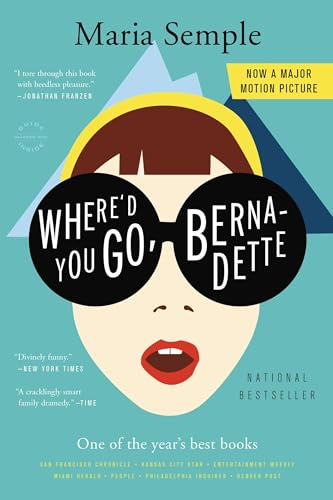
Despite the long odds, though, it’s possible. That’s exactly what happened to Maria Semple in 2012, when her second novel, Where’d You Go, Bernadette, took home a trophy, in a year when Gone Girl and 50 Shades of Gray also burst upon the scene to compete with the established stars of the time. My first novel too.
Maria is polishing the typeset pages of her fourth novel, Go Gently. She has been here before, so she knows what round she’s in, she knows what winning or losing looks like, she knows the date of her semi-finals: April 2, 2026. This is a long tournament we play in.
Being high-ranked doesn’t make it any less nerve-wracking. It might enable you to take some early rounds for granted (though: is taking anything for granted ever a good idea?), but you know that sooner or later, things are going to get awfully competitive, and a lot of people are going to tune in to watch. Not all of them are going to be rooting for you.
Where the Analogy Fails
Opponents. You don’t actually need to beat anyone. It’s very possible for an editor to publish two fantastic books in a year; a publishing house can release more than one monster hit in a season; there are a lot of slots on a bestseller list, a lot of glowing reviews, a lot of film options, a lot of awards. The important thing is that your book keeps advancing, but that doesn’t mean everyone else needs to be eliminated. There’s a lot of success out there, and yours doesn’t need to come at another author’s expense.
There’s also the definition of success. What exactly is the championship trophy in publishing? What’s the thing that’s being rewarded, or being measured? And if you’re honest with yourself, is that thing really the reason you’re playing?
This is a subject I’ll get into another time. For now, the US Open is underway. I haven’t yet watched any matches on television, and it’s possible I won’t. My wrist injury is bothering me, and I don’t want to make myself too antsy to get on the court. I don’t want to set myself up for frustration, disappointment, and pain.
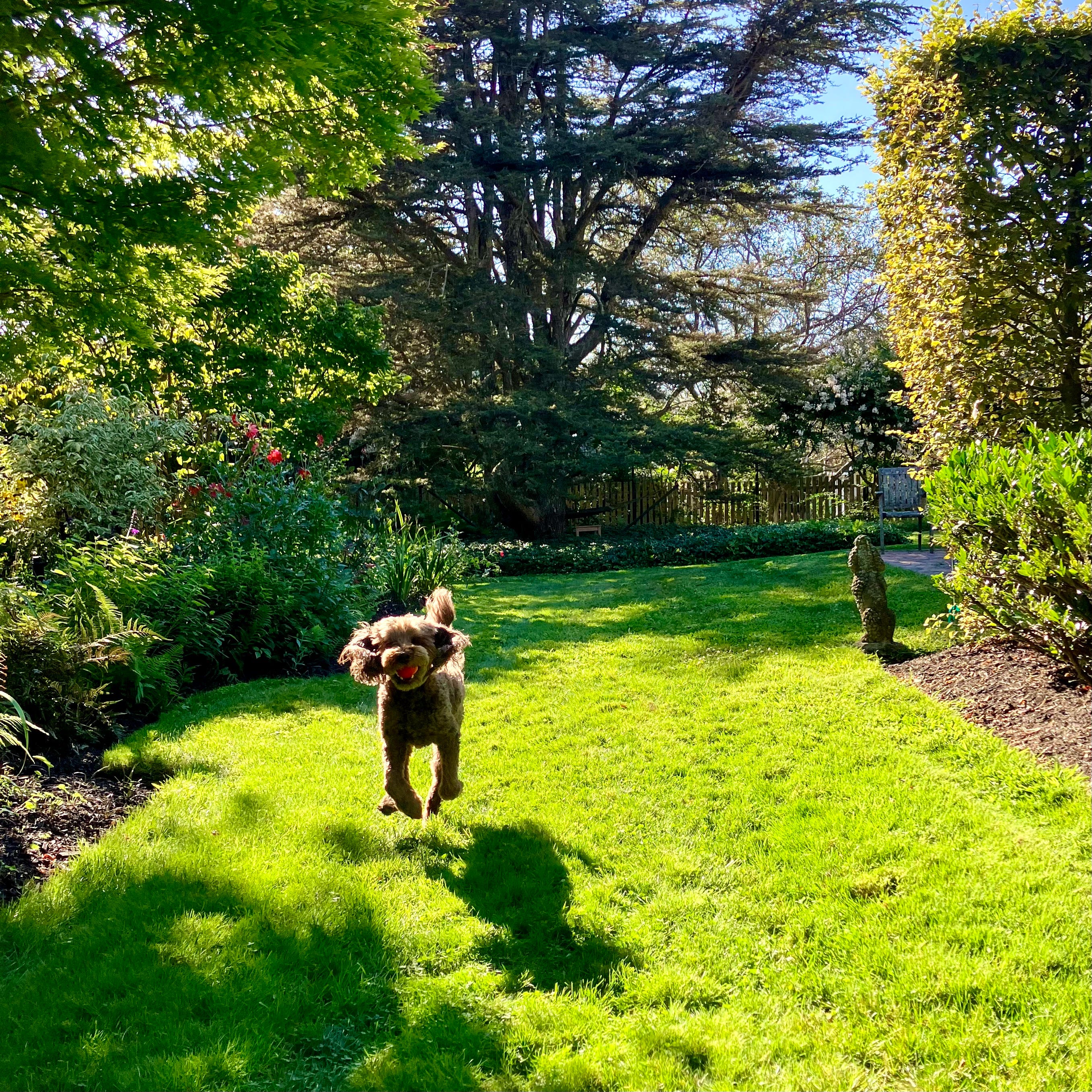
This is what winning looks like for Wally. It’s one of the greatest things about dogs: their championship trophy is completely achievable, every day.
Thank you Chris. Your posts are super insightful and helpful.
I think Wally has it figured out.
The process you described is so interesting. I recently read a post about an author's first book tanking in sales, causing major damage to her writing career. 10 years later it became a huge success on TikTok without any effort from the author, agent, or publisher.
I can't wait to see if I get past the first rounds when my book is ready. I am excited about the lessons I learn and the emotional roller coaster involved. I'm a journey person as opposed to the finish.